Reading the water: finding fish in real lakes and virtual ones
Fish rarely spread out evenly. Learning to read structure, depth, current and cover helps you choose better spots, whether you are on a real shoreline or exploring a game map.
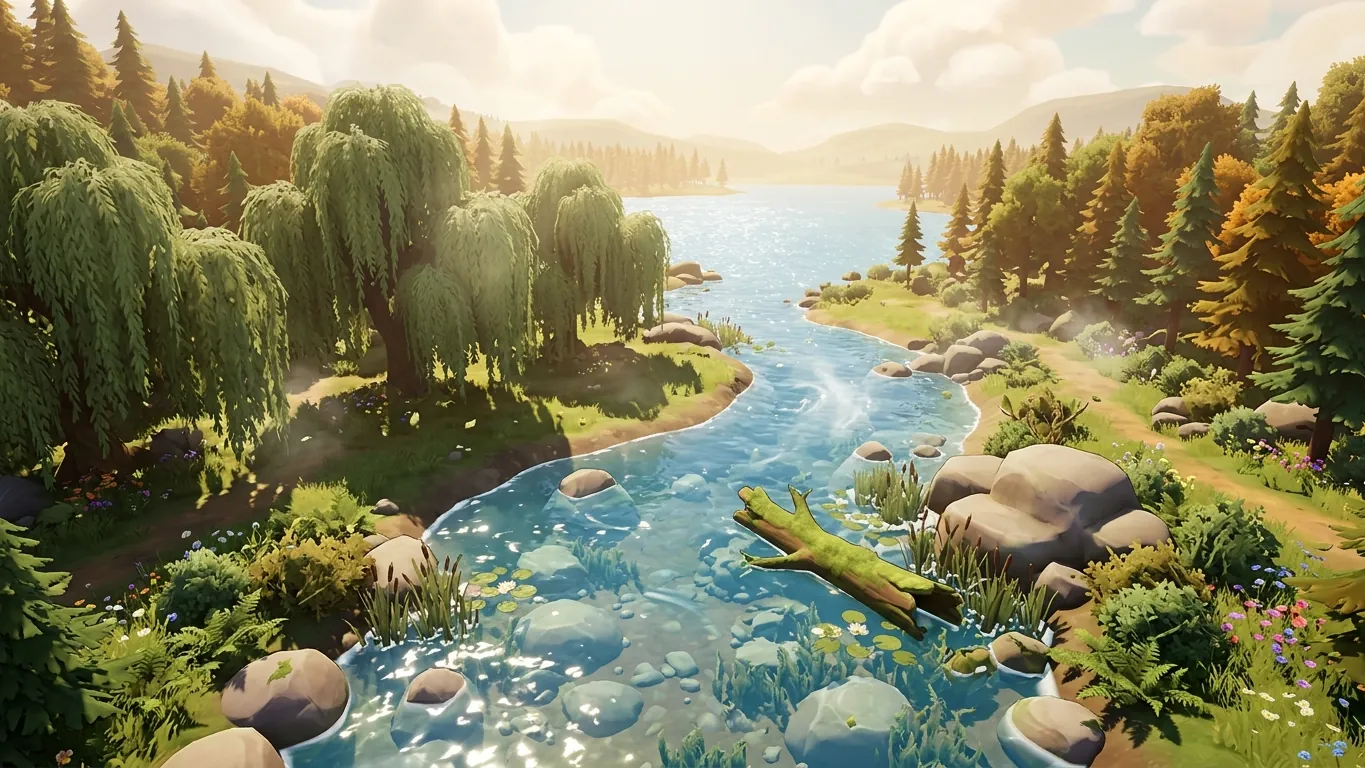
Why structure matters
In fishing, structure means any feature that changes the shape of the underwater landscape or adds something for fish to relate to. Rocks, fallen trees, docks, weed beds, drop-offs and points of land all count.
Fish often use structure for shelter, for ambush or for resting out of the current. That is why anglers so often cast near features rather than into open water. Many fishing games follow this idea, placing more fish around logs, weeds or piers. When you arrive at a new area, scan for anything that breaks up the flat surface or shoreline and start there.
Depth and drop-offs
Depth changes are some of the most useful features to understand. A drop-off is where shallow water quickly becomes deeper. Fish may move along these edges, using the deeper water for safety and the shallower areas for feeding.
In real fishing, people spot depth changes by water color, shoreline shape or electronic tools. In games, you might see a darker color in the water, an underwater view or a depth indicator on your lure. Try casting so your lure passes over the edge of a drop-off rather than straight into deep or shallow water. It is a simple change that can make a big difference in many games.
Current, inflows and moving water
Moving water brings food and oxygen, so places where currents meet or slow down are often worth attention. Think of a creek flowing into a lake, the calm pocket behind a boulder in a river or the seam where fast water meets slow.
River areas in fishing games sometimes model this with fish that hold in calmer pockets or face upstream. Cast slightly upstream and let your lure drift naturally into those spots. In real rivers, always be cautious around moving water, wear suitable footwear and avoid wading where you cannot see the bottom or judge the current.
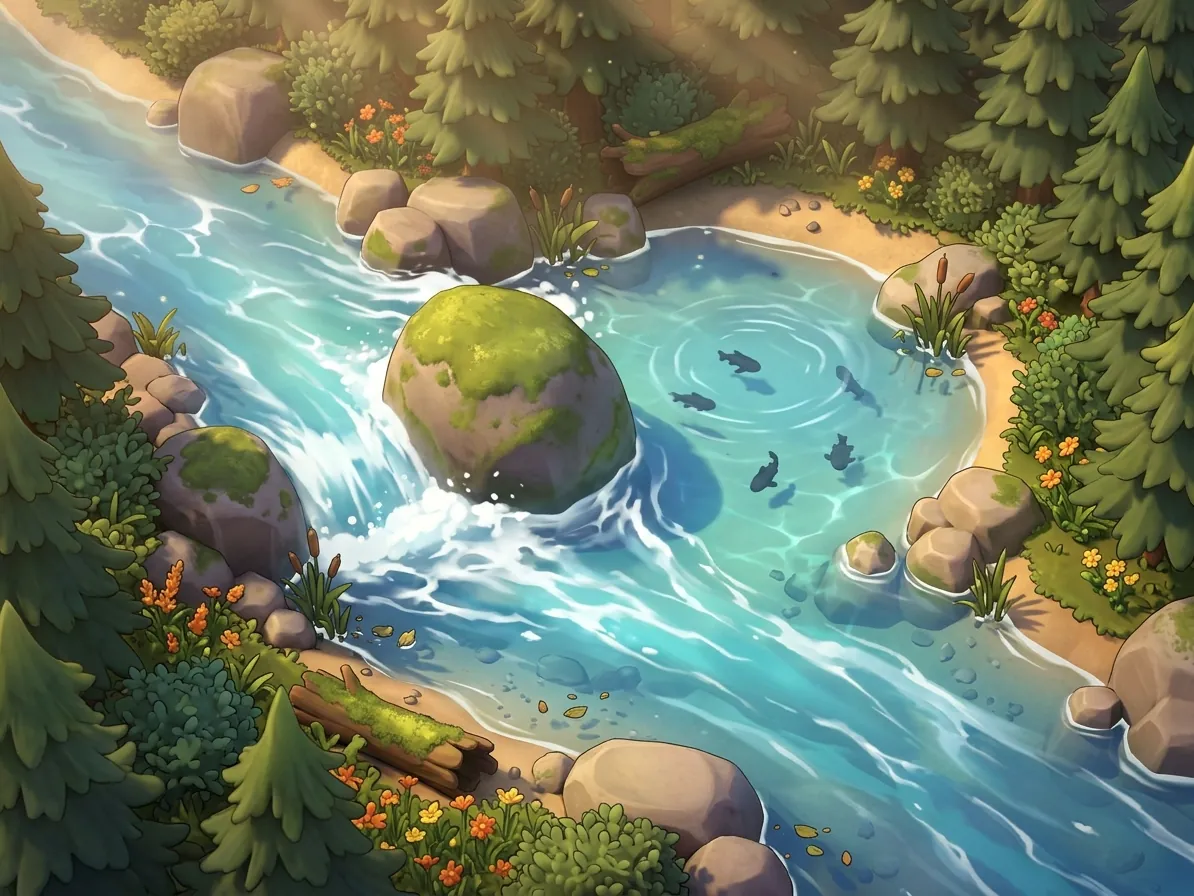
Shade, cover and light
On bright days, fish often seek shade. Overhanging trees, docks, lily pads and deep weed beds can all provide cover. Early and late in the day, when light is lower, fish may move more freely into open or shallow areas.
Games with a day and night cycle sometimes reflect this, with certain species appearing closer to shore at dawn or dusk. If a spot that worked in the morning goes quiet at midday, try moving toward shaded water. It is a small adjustment, and it teaches you to think about how conditions change throughout the day.
Practicing water reading in a game
Fishing games are a low-pressure place to practice these ideas. Next time you play, try a simple exercise: before casting, name three features you can see and decide which one you would fish first and why. Then compare your results across a few sessions.
You will start to notice the game's patterns, and you will also build a habit of observation that applies outdoors. Just remember that real water is less predictable than any game map. Reading it well is a skill that grows slowly through time and curiosity.
Related articles
 From controller to shoreline: planning your first weekend fishing trip
Inspired by fishing games to try the real thing? Here is a calm, practical guide to planning a first weekend outing, from local rules to simple gear.
Read more
 Cozy or simulation: finding the fishing game style that suits you
Fishing games range from relaxing minigames to detailed simulators. This explainer helps you understand each style and pick the one that suits you.
Read more
 Weather, time of day and bites: what anglers watch and games model
How light, weather, wind and seasons are commonly thought to affect fish activity, and how fishing games turn those ideas into clocks and conditions.
Read more