Spinners
A rotating blade creates flash and vibration as you reel. Often easy to use with a steady retrieve.
Fishing games love to fill your inventory with lures, but what are they actually for? This guide explains the main types and how to think about choosing one.
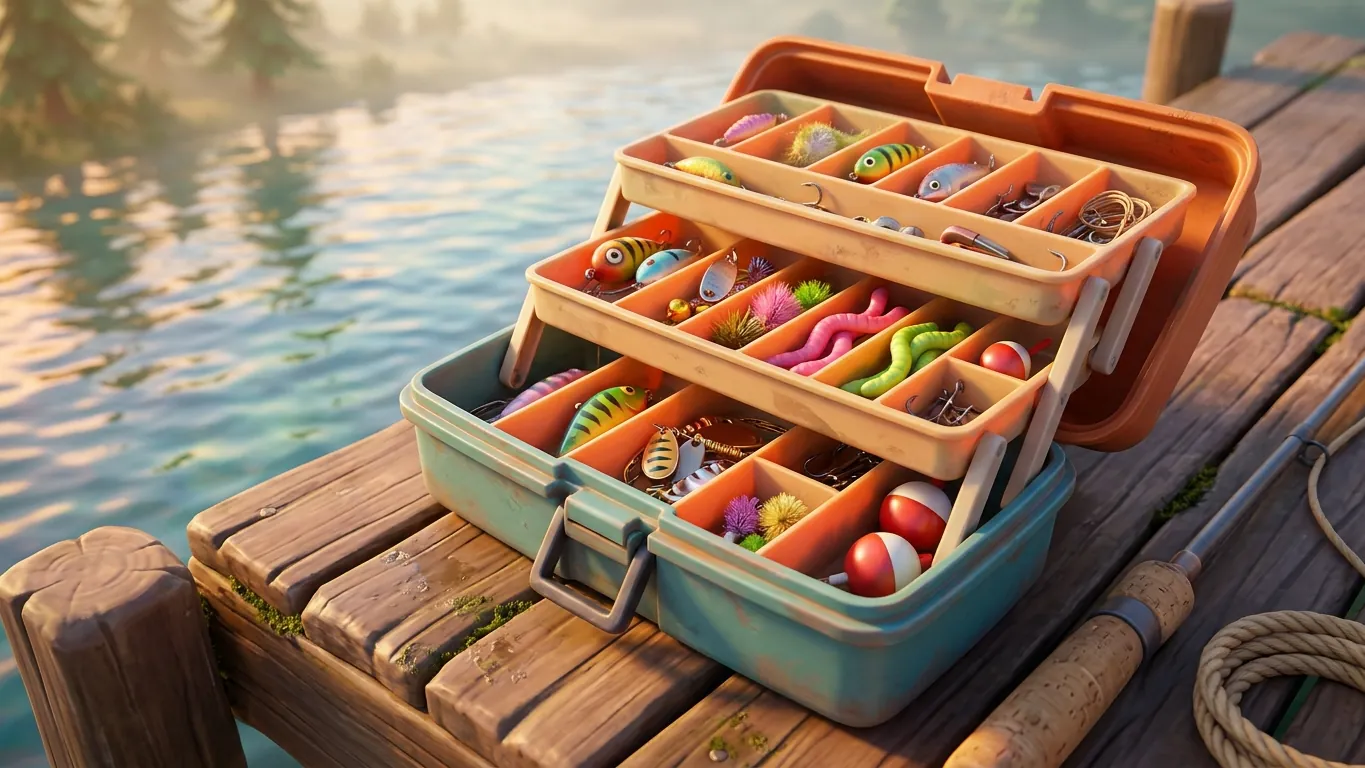
The first big choice in fishing is whether to use natural bait or an artificial lure. Natural bait includes things like worms or small insects. It appeals to a fish's sense of smell and taste and is often a simple, forgiving option for beginners.
Artificial lures are made to imitate prey through movement, color, flash or vibration. They usually require you to work them, meaning you reel, pause or twitch to bring them to life. Many fishing games include both, with bait often acting as an easy all-rounder and lures offering more control over which fish you target.
Names vary from game to game, but these categories show up again and again.
A rotating blade creates flash and vibration as you reel. Often easy to use with a steady retrieve.
Hard-bodied lures with a lip that makes them dive and wobble. The lip size usually affects how deep they run.
Flexible baits shaped like worms, grubs or small fish. Versatile and often fished slowly near the bottom.
Designed to float and create surface disturbance. Fun to watch because strikes happen in plain view.
A weighted head with a hook, often paired with a skirt or soft trailer. Usually worked with lifts and drops near the bottom.
Curved metal lures that wobble and flash. Useful for covering water and reaching different depths.
A common principle among anglers is to choose something that resembles what local fish are already feeding on. If small fish are common, a lure that looks like a small fish makes sense. If insects are landing on the surface, a topwater option might be worth a try.
Some fishing games build this idea into their systems, showing which species prefer which lure categories. Others keep it loose. Either way, thinking about size, color and depth gives you a reason for every choice instead of switching at random. Natural colors are a common starting point in clear water, while brighter options are often tried in murky water, though no rule works every time.
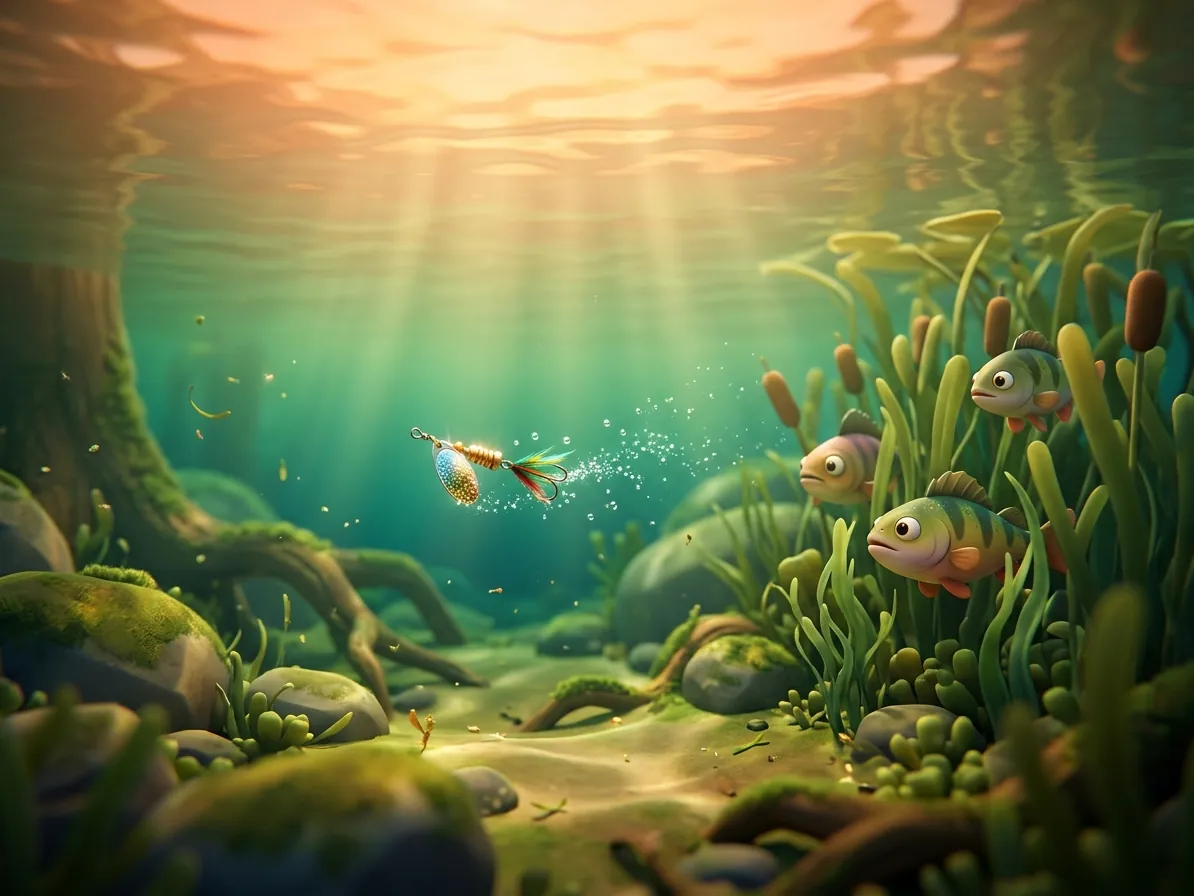
Real lure selection can get complicated, with countless sizes, weights and color patterns. Games usually reduce this to a manageable list. A lure might simply have a depth rating, a preferred species or a bonus for certain times of day.
That is helpful for learning. You can see quickly that a deep-diving lure reaches fish holding low and that a surface lure works near the top. Just remember that the in-game rules are the developer's interpretation. Real fish may behave differently, and many experienced anglers enjoy experimenting precisely because nature does not follow a chart.
When you unlock a new lure in a game, give it a fair trial. Pick one spot, try the lure with a steady retrieve, then with pauses, then with quick twitches. Note what happens. This small habit helps you understand the game's logic much faster than switching lures every few casts.
The same patient approach works if you ever try real fishing. Choose a couple of simple lures, learn how they move and give them time. A small, well-understood selection often feels more rewarding than a huge box you barely know how to use.
 Reading the water: finding fish in real lakes and virtual ones
Learn to read water like an angler: structure, depth, current and shade, and how these ideas help you find fish in both real lakes and fishing games.
Read more
 From controller to shoreline: planning your first weekend fishing trip
Inspired by fishing games to try the real thing? Here is a calm, practical guide to planning a first weekend outing, from local rules to simple gear.
Read more
 Cozy or simulation: finding the fishing game style that suits you
Fishing games range from relaxing minigames to detailed simulators. This explainer helps you understand each style and pick the one that suits you.
Read more